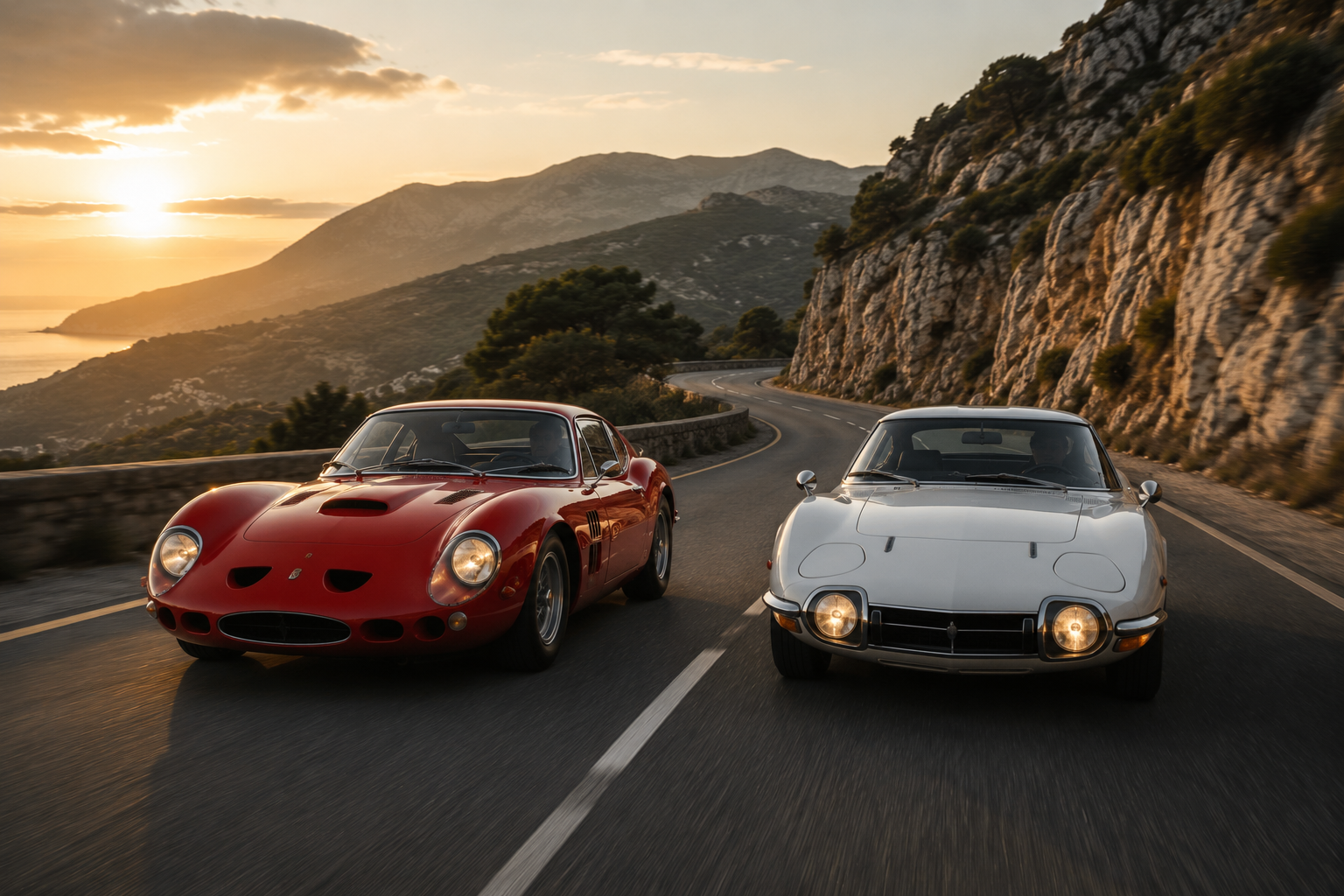
There's a reason older Ferraris and Japanese sports cars look almost identical.
Same designers. As simple as that. Pininfarina, Giugiaro, Michelotti shaped Ferraris, Mazdas, Nissans, Toyotas, and Hondas. The ancestor of the GT-R was styled by an Italian. The Lexus GS started as a Giugiaro design meant for Jaguar. By the 1990s, the design exchange between Italy and Japan had become so fluid that historians said the lines had simply blurred.
Two cultures. One shared instinct about what a car should be. And then, when the EV wave hit, that same instinct appeared again.
Ferrari structured their 2030 plan as 40% ICE, 40% hybrid, and 20% EV. Lamborghini's Revuelto, the hybrid top-of-the-line car, is sold out till late 2026. Honda brought back their Prelude as a hybrid. Toyota made the Camry hybrid-only.
How did the internet react? Naysayers called these brands slow, too attached to the past, too cautious. They held their ground anyway.
Back in 2022, Akio Toyoda said something that didn't get enough attention at the time. He said, "people involved in the auto industry are largely a silent majority. That silent majority is wondering whether EVs are really OK to have as a single option. But they think it's the trend, so they can't speak out loudly."
So, how has it played out? Right now, for most markets, including ours, EVs aren't fully there yet. And it is not about the vehicle. It is everything around it. Infrastructure. Grid readiness. Total cost of ownership. The ecosystem simply isn't ready to support full electrification at scale.
Hybrid isn't a fallback. It is what an intelligent solution looks like when you are honest about where the world actually is, and not where the headlines say it should be. Italy and Japan saw that early. Held their ground. And quietly, the market is catching up to them.