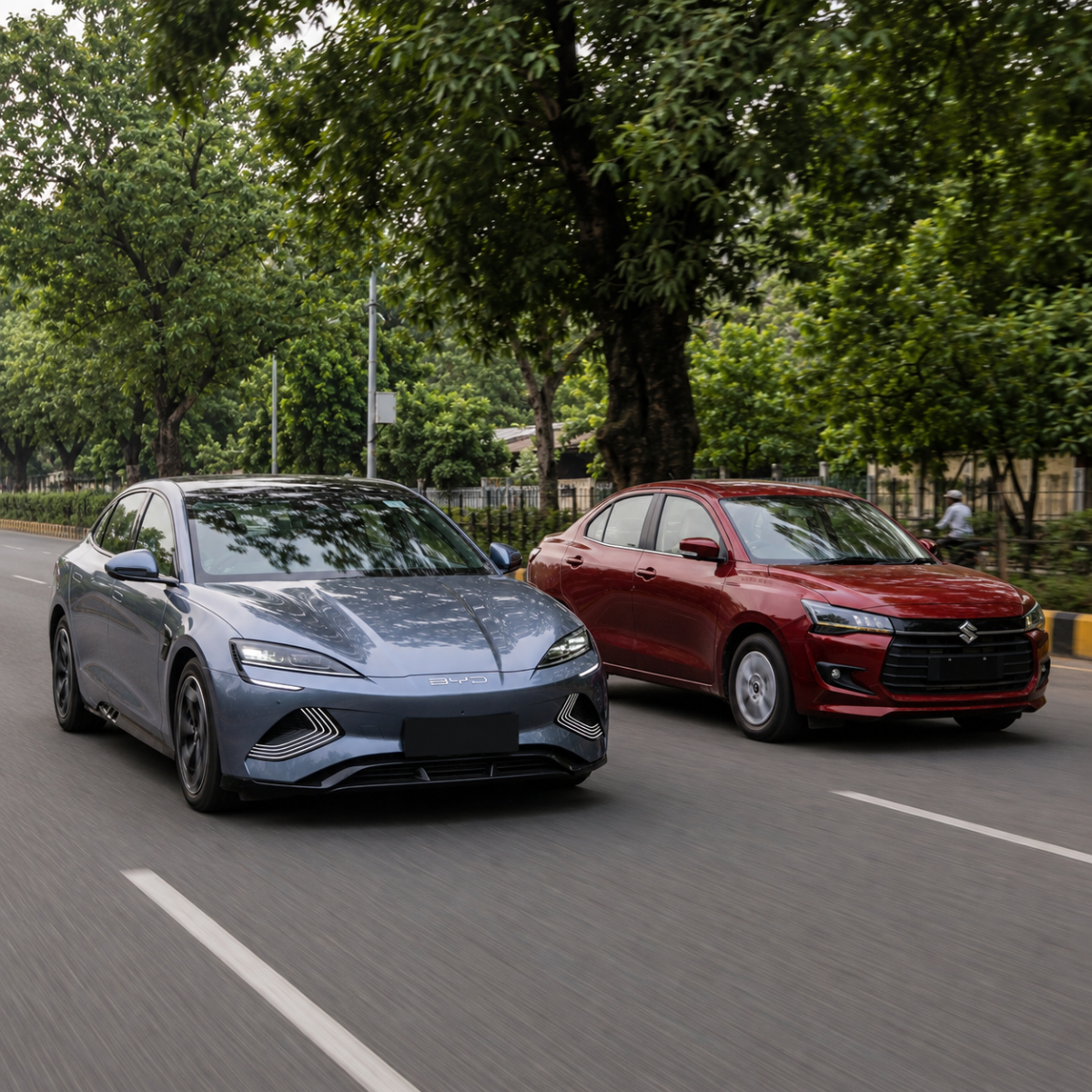
BYD and Maruti have more in common than you think.
Both had to answer the same question. Do you let the cab versions and the dream version share the same model?
Maruti said yes, albeit not deliberately. It just happened gradually, until one day the WagonR became India's national cab. The Dzire followed suit. Same model, same badge, one parked outside someone's home, the other picking up strangers in the middle of the night. Maruti tried to course-correct when their CEO said, during the launch of the new Dzire, "we are targeting the private buyer." Within months, the yellow plates told a different story.
On the other hand, BYD chose a different path, I believe deliberately. They entered India with the e6, an electric MPV sold exclusively to fleet operators. Not a single unit to a private buyer. Then, when they were ready for consumers, they came with a completely different model. The Atto 3. Different car, different positioning, different price point.
Now, sure, there were other factors too. The EV push, price point, early adopter excitement, and so on. But think about this for a second. A Chinese brand, in a market that was openly skeptical of Chinese products, with zero customer trust built up, still got the differentiation absolutely right. The fleet chapter and the consumer chapter never overlapped.
Meanwhile, Maruti, India's most trusted car brand for over 40 years, watched Tata beat their WagonR to become the country's best-selling car in 2024. For the first time in four decades, India's best-selling car did not carry a Maruti badge.
Desirability does not disappear loudly. It bleeds out quietly, one cab ride at a time.
Two brands, two completely different approaches to the same problem. Probably one of the most underrated case studies in brand positioning and business strategy you might find in the Indian market today.