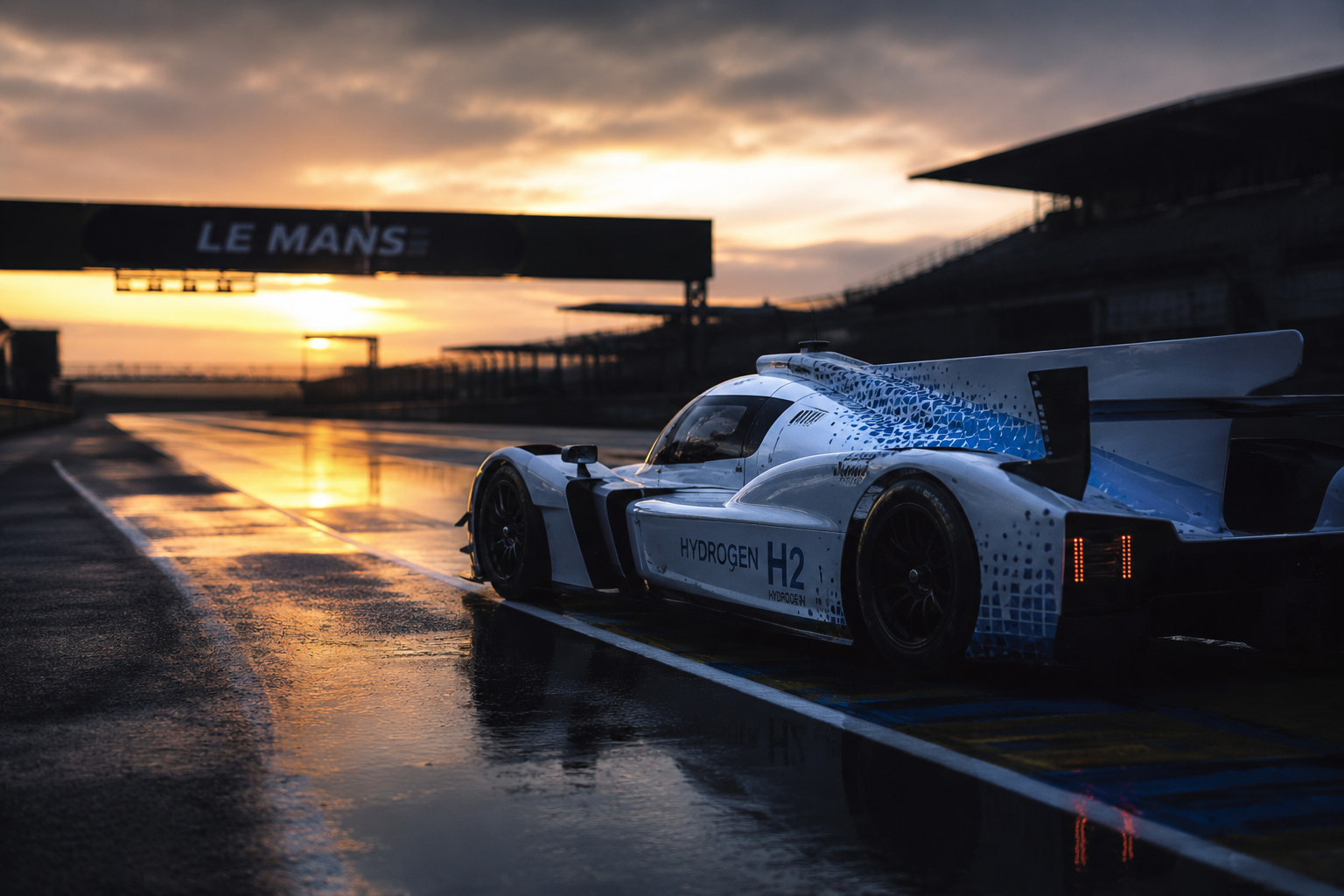
Everybody is talking about EVs. Meanwhile, Toyota is doing something else.
They are bringing their hydrogen combustion race car, the TR LH2, to Le Mans.
Think about it for a second. It is a much bigger deal than it sounds. Before you say, "well, hydrogen cars already exist, the Toyota Mirai is an example," you are right, but you are also not.
The Toyota Mirai is a hydrogen fuel-cell vehicle. The Toyota TR LH2, on the other hand, has a hydrogen combustion engine. It still has pistons, makes noise, vibrates, and still feels like a race car. The fuel is different. The feeling is not.
What is also fascinating is where Toyota is choosing to showcase it. Not at a motor show, or a lab, or even just a marketing video. They are showcasing it at Le Mans. The TR LH2 will not be competing in the 24-hour race itself, but it will be making demonstration runs during Le Mans week. The symbolism is hard to ignore.
Toyota has been working on hydrogen combustion racing since 2021, starting with the Super Taikyu series in Japan. Now, after five years of development, it is bringing a liquid-hydrogen prototype based on its Hypercar platform to Le Mans.
Will hydrogen combustion replace EVs? Probably not. Will it replace conventional ICE engines? Who knows. But the question to ask is this. If motorsport has historically helped accelerate technologies that eventually reach road cars, could hydrogen combustion be more than just an experiment?
Could this be an early glimpse of a path to carbon neutrality without giving up the sound, feel, and character that made people fall in love with cars in the first place? Or is Toyota chasing a future the rest of us simply cannot see yet?