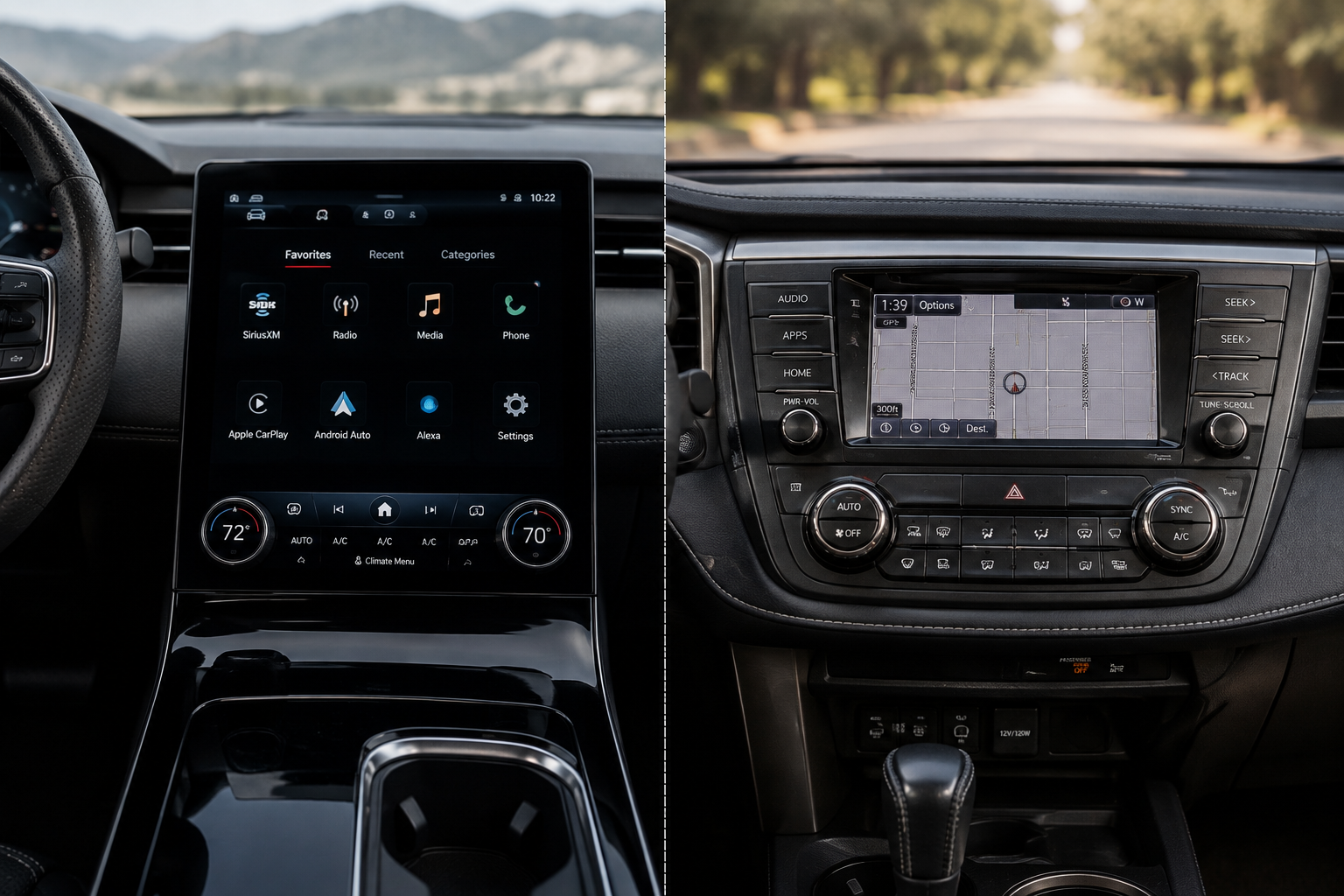
Sometimes, we need to appreciate when brands take a step backwards instead of forwards.
I know... that sounds a little controversial.
But if that step backwards comes from understanding, learning, and genuinely listening to the people using your products every day, I would argue it is far more valuable than taking a few more steps forward just for the sake of progress.
Last week, two completely different manufacturers caught my attention.
Mercedes-Benz announced that physical controls for frequently used functions are making a comeback after listening to customer feedback.
Then came Hennessey Performance. A company known for building outrageous horsepower monsters, introducing a car whose biggest talking point wasn't another record-breaking number. It was the "experience." A gated manual gearbox. Analogue instrumentation. A car designed to be driven rather than simply measured.
At first, these felt like two completely unrelated announcements. The more I thought about them, the more I realised they were both correcting the same mistake.
For years, the automotive industry evolved alongside consumer technology. Phones lost their keyboards. Computers became thinner, cleaner and increasingly touch-driven. Everything became digital. Minimalist. Software-defined.
Somewhere along the way, cars, and in general all automobiles, started following that same definition of what "modern" was supposed to look like.
Larger screens. Fewer buttons. More menus. More automation. Not because those ideas were necessarily better for driving... But because that's where technology everywhere else was heading.
And I think that's where we got it wrong.
A phone, laptop, smartwatch, all of them exist to be looked at, worked on, interacted with. Whereas an automobile exists to be driven (or driven in). They are fundamentally different products.
Why should they all evolve using the same rulebook?
So, are they are rejecting technology? Far from it!
Mercedes is still building some of the most technologically advanced cars on the road. Hennessey is still building engineering masterpieces.
What they are doing however is something far more interesting. They are recognising that not every innovation from consumer technology belongs inside an automobile.
Maybe it is too early to call this a "shift." Two examples (three if we consider Ferrari moving towards buttons too) certainly do not define an entire industry.
But I do hope more manufacturers start asking a different question. Not... "What more can we add?" But... "Does this actually make the experience of driving better?"
Because perhaps the next great innovation in the automotive industry isn't inventing something new. It's remembering that a car was never supposed to feel like a smart(phone/watch/device) in the first place!